
In the UK, anyone can claim to be an Electrician, therefore when hiring a spark some basic checks are prudent. If any person or business displays any of the following insignia, use the links here to verify that membership is current and the scope of work they're to be engaged on is included.
Current electrical schemes
The following organisations exist today specifically for electrical contractors in England and Wales. These entities will promote their members as being "trustworthy" over all others and may offer arbitration in the event of a disagreement, but they are unlikely to provide much further assistance should a job go bad and they have a financial interest in not cancelling a member of their scheme...

We start with the National Inspection Council for Electrical Installation Contracting (NICEIC) which is a trading name for Certsure LLC running two primary Competent Persons Schemes as Accredited Contractor and Domestic Installer depending on whether a member undertakes commercial/domestic or just domestic work. In around 2022, the DI scheme took over from an older Certsure CPS which was branded as ELECSA, thus bringing all members under the NICEIC marque. Anyone displaying an NICEIC logo should have a verifiable membership number and will appear on a search at https://niceic.com
 |
 |
 |
Any member of the National Association of Professional Inspectors and Testers (NAPIT), another Competent Persons Scheme set up in 2006, will have a unique membership number and can be verified at https://search.napit.org.uk. Their current logos are left and centre; the logo on the right is an ancient variant from the mid-2000s.

The Electrical Contractor's Association (ECA) is a trade association rather than a CPS and offers benefits to its members mainly skewed toward larger organisations working in the commercial and industrial sectors. ECA seem to be haemorrhaging members as it's (rightly or wrongly) perceived as something of a dinosaur-old-boys-funny-handshake-club. Any individual or organisation still waving this logo around can be checked at https://www.eca.co.uk/find-a-member. ECA, along with Electrical Safety First, owns Certsure LLC which trades under the NICEIC name, so many ECA members are also NICEIC accredited in an arrangement not dissimilar to cousins intermarrying. It's uncommon for your average domestic electrician to be affiliated with the ECA, since ECA apparently have no idea of there even being an electrical industry working on dwellings, therefore they offer little benefit to that end of the industry despite the nosedive they're in. Nonetheless, rogue traders like to use this logo fraudulently because it's been around since 1901 and lurks vaguely in the consciousness of the great unwashed British public.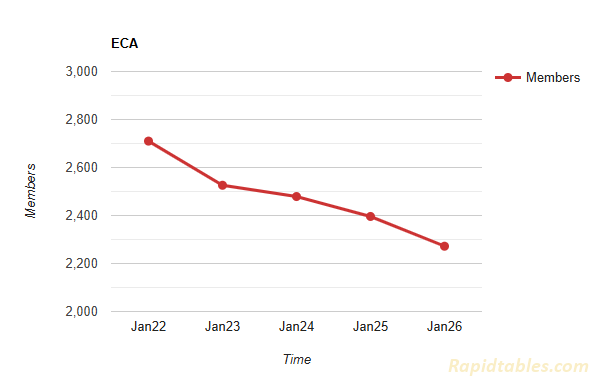

The Registered Competent Person [Electrical] logo may be seen where an individual or organisation is a member of a recognised Competent Persons Scheme and where they also appear on the RCP website at https://electricalcompetentperson.co.uk. This database went live in 2014 to provide a one-stop lookup of contractors who are part of a CPS, at least for domestic work in England and Wales. As to who runs it and funds it, an entity called "Electrical Competent Persons Scheme Operators Ltd." with contact points for both NICEIC and NAPIT can be found in the small print, and Companies House shows the address of NAPIT's head office and a board of directors made up of people from both those organisations. Inconsistences have been reported where valid contractors don't appear, so it's unknown how often this database is updated or how reliable it can be.
 |
 |
 |
Three more CPS schemes are Blue Flame Certification (BFC), Building Engineering Services Competence Assessment (BESCA) and Oil Firing Technical Association (OFTEC), although these are much less well known in the general electrical arena as they tend to focus on engineers and operatives in specialist heating and renewables industries. Nonetheless, anyone claiming to be an active member can be verified here for BFC, at this link for BESCA, and here for OFTEC.

The Microgeneration Certification Scheme (MCS) is a necessary evil for those contractors working with small-scale renewable energy systems such as solar PV, biomass, solar heating, heat pumps, and battery storage. Generally, those in such industries would be MCS accredited through their CPS and can be verified through those bodies. If the MCS and CPS organisations were any good at their job and lived up to the bold reassurances they spout from their websites, then domestic renewables wouldn't be the absolute pig's ear they so often are and you wouldn't be reading this. You can verify your installer is flashing this logo legitimately here: https://mcscertified.com/find-an-installer. MCS is what happens when government interference tries to raise industry standards; the result often being an admin nightmare diligent small contractors cannot keep up with and that large firms with poor practices can afford to steamroll straight through.
Third-party organisations
 |
 |
|
| Post and pre 2023 logos | ||
Electrical Safety First is a charity that promotes good practice with guidance for homeowners and contractors. They, along with the ECA, own Certsure LLP which runs the NICEIC competent persons schemes. ESF are not an accrediting body and their logo is not permitted to be used as any kind of endorsement by third-party contractors, therefore any electrician displaying the current logo (or their prior one in red) is acting fraudulently. ESF has a 'Find an Electrician' feature which links to the Registered Competent Persons database, and although they're a non-profit entity, they perhaps have a vested interest in recommending you use a contractor registered with a CPS, especially if it happens to be someone on NICEIC's books who they ultimately part own. Indeed, before July 2014, this charity would only provide a lookup for those who were accredited with NICEIC and ELECSA and did not recognise other schemes such as NAPIT, although after this date their website refers visitors to the Electrical Competent Persons database. Despite any possible conflict of interest, they do very good work and are held in high regard by competent sparks.
 |
 |
|
| The chevron logo (right) was phased out in October 2023 | ||
Which? is a supposed consumer champion who run an independent Trusted Trader scheme. Although arguably not the force it once was, and also not a CPS, membership of Which Trusted Traders means a company has been vetted a little more thoroughly while their review platform is moderated to minimise review stuffing. Which? also offer an Alternative Dispute Resolution service to help an end client resolve any differences or disagreements with a contractor should a job go awry. Unfortunately, Which? may rely on third-parties such as NICEIC, ECA or NAPIT to do the vetting and may refuse membership to a non-accredited electrician or terminate membership should an electrician choose to leave a CPS scheme... which is daft as it's perfectly possible to be a conscientious tradesperson outside of any CPS umbrella. Their 'chevron' logo (right) was replaced with the oval logo in 2023, so anyone still displaying the wrong marque may be suspect as terms of membership state the new logo must be employed from October of that year. In any case, always check at https://trustedtraders.which.co.uk.

Outfits such as Checkatrade "Where reputation matters" along with a multitude of other middleman operators including, but not limited to, Rated People, Trust-a-Trader, MyBuilder, Facebook etc., all deserve to be treated merely as 'directory services' in much the same way as the Yellow Pages of old. Once a trader builds up a review portfolio they don't want to lose, they may find themselves locked in while their membership fee skyrockets. As for end clients leaving negative reviews should they feel they didn't receive the expected experience, this is discouraged by many such services who have a financial interest in keeping their members looking well-rated and on the books. Despite the confidence their names might instil with words such as checked, trusted, and rated being prominent along with reassuring ticks often displayed in their logos, the terms & conditions of such job aggregation sites absolve them of any liability should things go bad. Checkatrade introduced a £1000 workmanship guarantee in January 2026, but it's loaded with terms and doesn't go far if your £15000 bathroom has been ballsed-up. When they vet prospective trades, minimal checks may be made with basic tests merely for solvency and insurance. They're in no position to assess skill or workmanship and they certainly perform no site visits or competency checks. An upstart who hasn't earned a reputation can quickly build a profile that makes them appear longstanding, legitimate, and trustworthy and it won't be until multiple victims fight to leave bad feedback will they be outed. These platforms actively encourage a race to the bottom through cheapskate customers dangling 'leads' that the lazy or the desperate scrabble over to win. Good, established electricians don't have to rely on lead-finder slop and don't engage in the indignity of corner-cutting to win whatever scraps have been tossed out. It's perhaps no coincidence that when a website or a van of a rogue trader is showing a logo they're not entitled to be using, there's often a nonsense symbol for one of these job aggregation sites proudly displayed right alongside it.
 |
 |
|
| The new TrustMark logo (left) and the now defunct pre-2019 logo |
||
Trustmark 'Government Endorsed Quality'. Well, that sure sounds like it offers peace of mind - we'd all like to know the Prime Minister has personally approved our own kitchen refit plans with a thumbs-up to top quality! However, with the NHS failing, HS2 out of control and Horizon falsely accusing postmasters of pocketing pounds, we should perhaps reign back our confidence in anything the government happen to be rubber-stamping. Trustmark is little more than an alternative dispute resolution service and gaining membership to this quango (or whatever it might be) is demonstrably easy: those already in a competent persons scheme can often simply pay an additional fee to join, whilst ECA members can count upon it at no extra cost at all. Trustmark put their own trust in the likes of NICEIC, NAPIT and ECA doing the legwork on ensuring members maintain their standards, but if that were happening then you perhaps wouldn't be on this website. As always, check anyone who happens to be boasting such bona fides is valid via their official website - especially if your contractor is still using the outdated logo, but don't expect much from the government if your relationship with your electrician short circuits.
Not really a third-party logo, and not really a valid logo at all, but one oft used to indicate a given electrical installer works to Part-P of the building regulations... although all building work in England and Wales has to comply with Building Regulations regardless of who you are and what you're doing. Approved document Part-P refers to electrical safety in dwellings and all the approved documents can be found on the government planning portal. The 'Registered Installer' portion of this symbol perhaps infers an installer is accredited with a CPS for domestic work that may come under the scope of Part-P, but an installer doesn't have to be registered with any CPS scheme to comply with such. If the electrical work is notifiable and the planning application happens to include the electrical alterations, then the notification has already occurred. Those electricians who happen to perform little to no work under Part-P, perhaps because they largely confine themselves to commercial tasks, fault finding or inspections, may have no reason at all to be a member of a CPS scheme, and quite right too. This logo, and variants of it, should be taken with a pinch of salt as its origin and ownership are unknown, although it bears similarity to the early NAPIT logo seen above and may have originated with that shower.

The City & Guilds emblem may be seen on the livery of some electricians with a view to showing the operator has attended vocational qualifications relevant to their trade. Whether that really is the case or not is debatable of course and proves nothing in of itself. If they have been, or are, members of a CPS then their bona fides will supposedly have been checked, at least for the scope for which they've been accredited. On its own, it's pretty meaningless, but if the operator's qualifications are listed alongside it, then that perhaps accounts for something so long as proof of those qualifications can be provided, upon request, to any interested parties. C&G aren't the only fish in the pond with the likes of EAL and LCL also being valid. It should also be noted that C&G are not the body spearheading training and learning that they once were, and have recently been sold to a Greek investment group whose interest is more likely to be to milk this venerable marque for money.
Buried bodies and dodo logos to watch out for
ELECSA was a competent persons scheme operated from the 2000's until around 2022 and run as a sister operation to NICEIC, often taking on members who were sometimes seen as 'less qualified or worthy' of joining the more valued NICEIC brand. It was retired in the early 2020s, presumably because Certsure LLC figured it was too expensive, or time consuming, to operate two UKAS accredited and government approved CPS operations when they could cut costs by shoving it all under NIC's single red and black parasol. ELECSA members transferred to the NICEIC Approved Contractor or Domestic Installer schemes when it was shuttered, but as a brand, it never had great kudos in the first place and is unlikely to be abused by anybody today.
The Electrical Safety Council was set up in 2005 to split the charitable activities of NICEIC from their commercial operations. It was rebranded as Electrical Safety First in 2014. It's unlikely anyone is still sporting this graphic but if it does appear on your quotation paperwork, be aware that it was never an endorsement, it was never permitted to be used by any commercial third-party, and it hasn't existed for over a decade!
The Electrical Safety Register was a short-lived database set up in 2012 to list electricians holding membership of interrelated brands ELECSA, NICEIC and ECA. It disappeared as part of the rebrand of the Electrical Safety Council into Electrical Safety First in 2014. Part of the rebrand was down to misuse of this logo which can be seen to incorporate the ELECSA, NICEIC and ECA emblems whose members the register listed. Those of a sneaky bent, usually ELECSA registrants, would display this graphic to falsely insinuate they were affiliated with all three recognised bodies, and as a member of at least one, they claimed to be 'endorsed' by Electrical Safety Register. ESR was never an endorsement however and this logo was never permitted to be used in this way. The rebrand to Electrical Safety First removed this problematic pic in favour of the brand agnostic Registered Competent Person image seen earlier, and membership rules for all organisations were tightened to stipulate only the displaying of a symbol of any given member's actual association be used and no others. Nonetheless, this graphic still appears on rogue sites and social media posts over a decade since it was withdrawn.
Back in 2013 after the charity Electrical Safety Council published the Electrical Safety Register whose 'find a reputable accredited electrician' only showed members of the NICIEC and ELECSA schemes that it part owned, NAPIT retaliated with the ElectricSafe Register, a database containing all their members, but that was also open to any other accredited contractors who wished to join regardless of whom they were accredited with. It was short lived as Electrical Safety Council became Electrical Safety First in 2014 and a universal lookup, supposedly encompassing all registered electricians, was then published on the Registered Competent Person website. With a single database now in place, and because take up of the Electricsafe Register was low, NAPIT decided they didn't need to reinvent the wheel after all, so this thing was taken out back and shot in the face. That said, and quite remarkably, this short-lived graphic can still be found lurking today on rogue vehicle graphics and websites (sometimes next to a CheckaTrade logo - so much for their checks!)

Popping up in prominence in the mid 2010's were Stroma who offered an alternative to the older and more established schemes and with an attractive membership fee around half that the others were charging. Although not widely recognised by the trade or the public, they nonetheless provided the service needed to get boxes ticked which was all many sparks wanted of them. Although Stroma still exists, their electrical CPS was snapped up by NAPIT in around 2019 who absorbed their membership and promptly did away with the low-cost subscription. As Stroma never had a chance to gain brand traction, it's unlikely someone will still be sporting this logo today, and if they are, they shouldn't be.

Little is known about the short lived British Register of Electrical Testers and Inspectors (BRETI) other than, during COVID, it is believed a disgruntled electrical contractor, dissatisfied with losing work through lockdown and seeing no reduction in his accreditation fees, because none did so aside from ECA, took it upon himself to usurp the traditional CPS's by creating one of his own. Whilst the frustration is understandable, the way in which it was implemented was problematic. The BRETI social media accounts were aggressive and attacked individuals of other organisations by name whilst also insinuating anyone not registered with them was, by default, a rogue trader. Enquiries made by this author and others as to who exactly was vetting applicants and passing judgement on who was, or wasn't, valid went unanswered. BRETI vanished about as quickly as it had appeared and is mentioned here only to keep the wonder of history alive. A shame perhaps, as someone needs to upset the status quo...
And of course, for what it's worth, from November 2025 there's now this...
...which is itself just a logo and pretends to be nothing more. One that explicitly means "Not registered with a CPS" for those who want nothing to do with any or all of the above, although it can also be used as a protest for those electricians who are dissatisfied with how things work but who can't do away with their accreditation.
There's no lookup for this one as there's no central membership database, fees or monitoring. It's just a logo to show the holder is operating freely without accreditation from any other body.
Independent, unregistered, not accredited, unverified - look on it however you will, but some electricians don't need or don't seek the costs and administrative overheads that come with accreditation, or they've had enough of the profiteering motives behind scheme operators who claim to be acting in the best interests of the industry while overlooking the workmanship crumbling around their ears.
So how does INAEC fix things? ....well, it doesn't. So, here's what it's about...








